Green Twigs / Journal / Food waste
Bokashi or the council food caddy: which is actually the better choice?
Bokashi fermentation can handle meat and cooked food, but most UK households now have a weekly food waste collection. A side-by-side look at where each one wins.
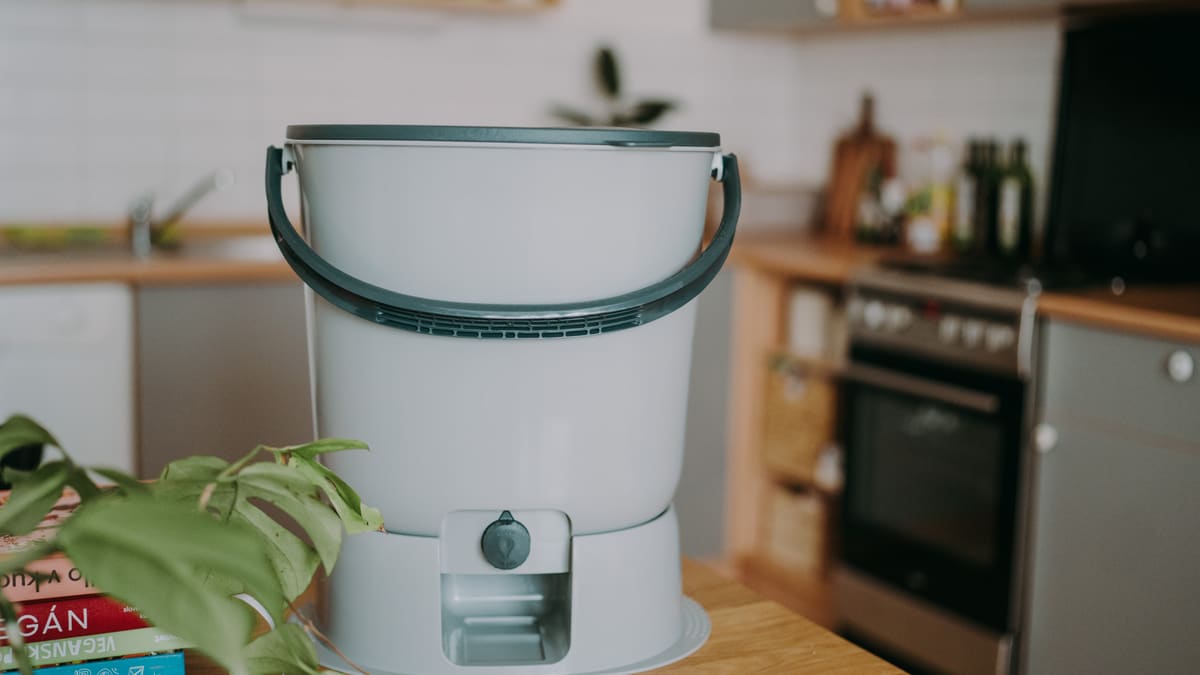

Bokashi used to be the only answer for flat-dwellers with cooked leftovers and no outside space. In 2026 the council food caddy has arrived almost everywhere in England. The choice is more interesting than the sales copy suggests.
The quick answer: if your council takes food waste weekly and you have no garden, use the caddy. If you want to compost cooked leftovers, meat and dairy and you have somewhere to bury the result, bokashi is worth the small faff. A surprising number of households benefit from doing both.
What bokashi actually does
Bokashi is not composting in the usual sense. It is anaerobic fermentation: you layer food waste in a sealed bucket with a bran inoculated with lactic acid bacteria, press it down, and leave it for about two weeks. The waste does not rot; it pickles. At the end you have a sour-smelling mass that is ready to go into soil, into a compost bin, or into a trench, where soil life finishes the job in a few weeks.
Because the process is acidic and sealed, cooked food, small bones, cheese, meat and citrus all work in a bokashi bin, which excludes them from a normal cold compost bin.
What the council food caddy does
Since Simpler Recycling, kerbside food waste collection has been rolled out across almost every council in England, in addition to long-standing schemes in Wales and parts of Scotland. The small kitchen caddy is tipped into an outdoor bin, which goes out weekly, and the contents go either to an anaerobic digester (producing biogas and digestate) or to in-vessel composting. Both routes handle meat, bones and dairy without issues.
Side by side
| Bokashi | Council food caddy | |
|---|---|---|
| Handles cooked food and meat | Yes | Yes |
| Needs outdoor space | To bury the pickled waste | No (caddy only) |
| Produces a useful end product at home | Yes: soil amendment and liquid feed | No (handled off-site) |
| Weekly effort | Layer, press, drain the liquid | Empty caddy into outdoor bin |
| Ongoing cost | Bokashi bran (a few pounds a month) | Included in council tax |
| Smells inside the home | Like a pickle when opened | Can be strong if liner is not used |
When bokashi is the better choice
If you are a tenant in a flat with a tiny bin-share and no reliable food waste collection, bokashi is still the tidiest kitchen-waste answer we know. The bin is airtight, the smell stays inside, and the finished ferment can be given to a friend with a garden, buried in a community garden plot, or added to an allotment.
It also makes sense for households that cook a lot and produce more leftovers than peelings. A compost bin struggles with those; bokashi does not.
When the caddy is the better choice
If your council takes food waste weekly, and most English councils now do, the caddy is simpler, cheaper and handles everything bokashi handles. The food waste does not vanish; it is turned into biogas that offsets a bit of fossil fuel, and digestate that goes to farmland. That is not a bad outcome for a bag of chicken bones and apple cores.
What the caddy does not give you is anything to put in your garden. If you want home-made soil improver, keep running a cold compost bin on peelings in parallel, and let the caddy do the rest.
Doing both
Many households we know use the caddy for meat, bones and rice leftovers, and keep a small kitchen bowl of peelings for the compost bin. It is not a lot of effort and it means the garden gets the useful stuff; the rest goes off to the digester.
Bokashi is a third stream that earns its place when you want a specific soil booster, or when you simply like watching biology do something odd in a bucket. Several of the editors keep one going from autumn through spring and let it rest in summer when the compost bin is faster.
Whichever you pick, three habits that save bother
- Keep the indoor caddy in the fridge in summer, or empty it daily. The smell is from standing time, not the food.
- Do not line a bokashi bin with plastic; it defeats the sealing.
- If you are buying bran or liners, check they carry the seedling compostable logo so they match whatever route you use; see our piece on what compostable labels really mean.
Neither bin is a lifestyle, both are just chores that quietly stop food going to landfill. Pick the one that fits how you cook and where you live.