Green Twigs / Journal / Compostables
Is compostable plastic actually worth it?
A sceptical UK look at compostable bags, cups and cutlery: when they help, when they make waste harder to handle, and the labels to check before you buy.
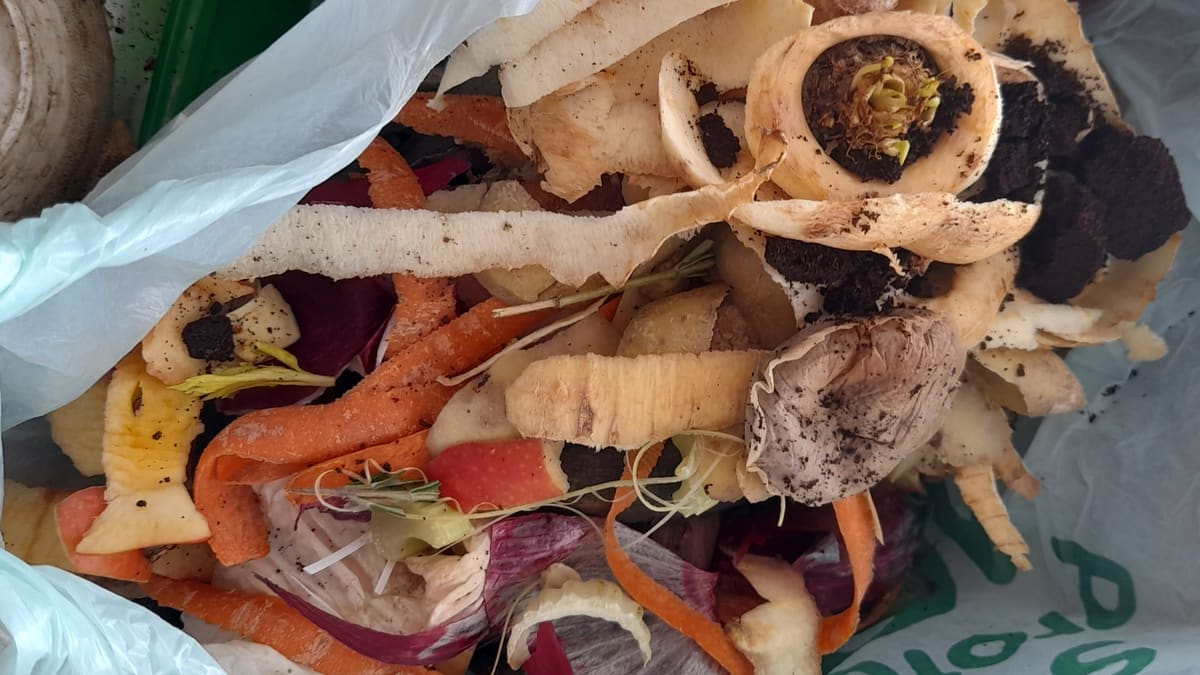

The queue to the till in any UK supermarket has at least one person holding a cup labelled compostable and feeling slightly virtuous. The label is doing a lot of work, and it rarely means what people think.
Compostable is a technical word, not a moral one. A cup, bag or piece of cutlery can only be called compostable in the UK if it passes a standard, usually BS EN 13432, which asks that the item break down into carbon dioxide, water and biomass under industrial composting conditions within about twelve weeks. Industrial composting is a controlled process with heat, moisture and turning. Your council's food waste contractor does not necessarily use it.
What the label is really saying
Two labels do most of the work on UK packaging. The seedling logo from TUV Austria and the OK compost mark mean the product meets EN 13432 for industrial composting. A separate OK compost HOME mark means it has also been tested to break down at the lower temperatures of a domestic bin. Only a small share of compostable plastics on sale in the UK carry the home mark, and most tea bags, caddy liners and coffee cup linings do not.
If the item only has the industrial mark, it is only compostable if it reaches an industrial composter. Otherwise it behaves very much like any other plastic, except that it may also disrupt plastic recycling if it ends up there by mistake.
Where it actually goes in a UK home
The route depends on your council, and the honest answer is that most councils do not take compostable plastic. A caddy liner certified for industrial composting is fine where the local food waste collection is sent to in-vessel composting or anaerobic digestion that is set up to accept them. In many places the plant simply screens them out, and the plastic goes to incineration with the rest of the contamination. Check the local recycling page on GOV.UK for your postcode; it is honest about what is accepted.
Where it helps
There are three cases where compostable products pull their weight. Food waste caddy liners that carry the seedling logo are the most common, because councils that accept liners accept these, and the bags do stop a smelly caddy. Thin fruit and vegetable produce bags are another, for anyone who really cannot carry loose avocados. Cups and cutlery at a managed event with a dedicated compost stream are a third, as long as the composter has agreed to take them.
Outside those cases, the environmental argument gets thin. A compostable coffee cup lid dropped on a pavement does not disappear in a week. In cold, wet UK soil it behaves almost like any other piece of plastic for months. If you want a better cup, carrying a refillable one still wins; see the kitchen swaps we have kept using.
What makes it worse
Compostable cups mixed with recyclable plastic in a kerbside bin are a problem at the sorting centre. They look enough like standard PET or PP to be sorted into the same stream, and then they contaminate it. If your council does not accept them, the general waste bin is the less bad place for them. That is not a satisfying answer; the policy is slowly catching up.
On the home bin: do not add any item that only has the industrial mark. Cold compost does not reach the temperatures needed to break it down. You will fish out an undisturbed fork in two years.
What to check before you buy
- Which mark is on the pack: the seedling or the HOME version. Only the HOME mark belongs in a garden bin.
- Whether your council's food waste collection accepts liners with the seedling logo. Many do, some do not.
- Whether there is a reusable alternative that will not be a hassle. A cotton bag for mushrooms wins over any compostable bag.
A note on bioplastics in general
PLA, the most common compostable bioplastic, is made from fermented plant starch. It is not drop-in biodegradable. In a landfill it can last for decades, and in seawater it barely softens. It is the processing route that makes the difference. If the packaging says only bio-based, that is about the raw material, not what happens at the end. Biodegradable on its own means very little in UK regulation, which is why WRAP keeps pressing for clearer labels.
Buy the ones that fit what your local system can actually do, and treat the rest as a design idea that has not quite arrived yet.