Green Twigs / Journal / Home composting
Starting a home compost bin in a UK garden: a practical beginner guide
How a small cold compost bin works in a UK garden, what to feed it, what to keep out, and how long before you can dig the first bucket of compost into a bed.
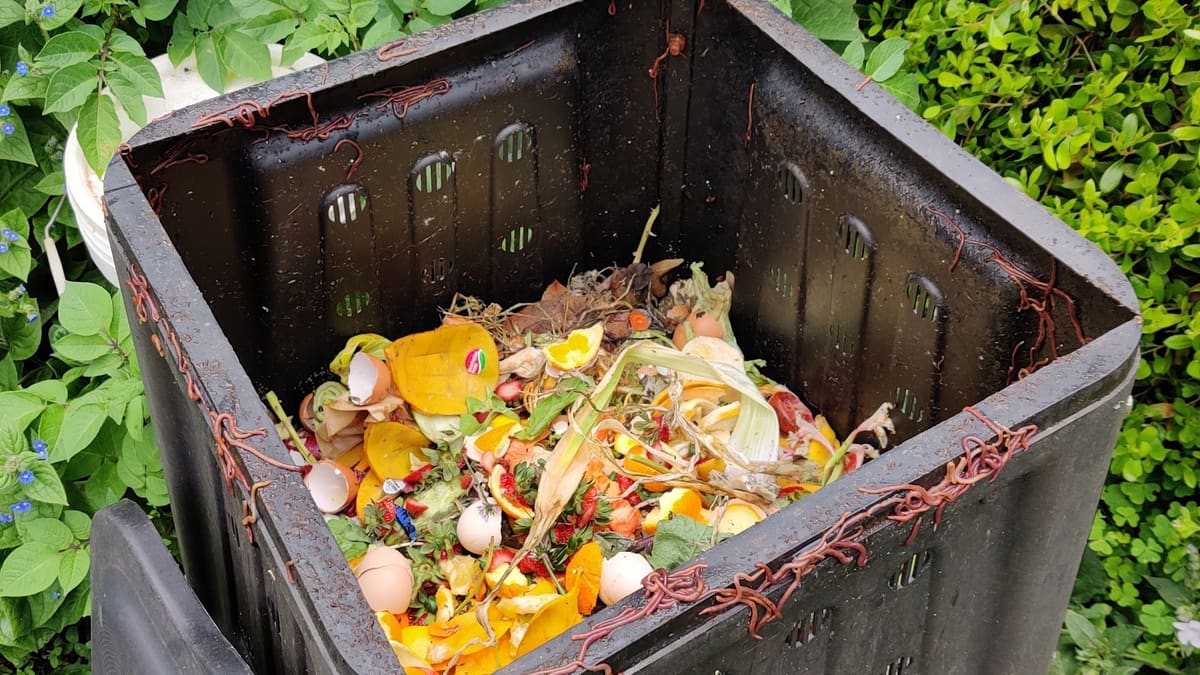

A compost bin in a British back garden is less science experiment than quiet habit. If the mix is roughly right and the lid goes back on, it does most of the work itself.
The useful question for most UK gardens is not hot-vs-cold composting, which belongs on a smallholding. It is: can I fit a dustbin-sized plastic cone in a corner, and will it actually turn into compost? The answer is yes to both, as long as you avoid three specific mistakes.
The bin itself
A standard black cone with a lid and a hatch at the base is enough for most households. Many English councils still subsidise these through getcomposting.com, a scheme run with WRAP; prices vary by council, so check before you buy at full price in a garden centre. Set it directly on soil, not on paving. Worms and other soil life need to come up into the pile, and the base hatch needs ground to drain to.
Site it somewhere out of full sun, where you will not mind walking in winter. A compost bin that lives at the bottom of a long wet garden stops being used in January, and then nothing happens in it.
The mix: browns, greens and air
A compost pile is a slow stew of carbon-rich material (browns: dry leaves, cardboard, straw, shredded paper) and nitrogen-rich material (greens: fruit and vegetable peelings, grass clippings, coffee grounds, used tea leaves). Aim roughly for half-and-half by volume. More greens than that and the bin goes slimy and smells; more browns and it goes dormant.
The reference ratio many gardeners quote is around 30:1 carbon to nitrogen by mass, but at the kitchen scale it is easier to think in handfuls: for every full caddy of green peelings, add a similar loose handful of torn cardboard or dry leaves.
What goes in, what stays out
| Yes | No (in a cold bin) |
|---|---|
| Fruit and vegetable peelings | Cooked food, meat, fish, bones |
| Coffee grounds, tea leaves (loose) | Dairy, bread, pastry |
| Egg shells (crushed) | Dog or cat waste |
| Grass clippings, soft prunings | Glossy magazines, treated wood |
| Cardboard, paper, dry leaves | Compostable plastic without a home mark |
| Vacuum lint (if your carpets are natural fibre) | Diseased plant material |
For the full-flavour kitchen waste, bokashi or the council caddy are better routes; see our side-by-side on the two.
How long before you can use it
In a domestic cold bin in southern England, expect twelve to eighteen months from first scraps to a bucket of usable, dark, earthy compost at the base hatch. In colder northern gardens it is closer to eighteen to twenty-four. Turning it with a fork once in late spring and once in late summer speeds things up, though not as much as the books suggest.
You will know it is ready when the material looks like soil, smells faintly woody, and the original peelings are no longer identifiable. Any larger uncomposted lumps go straight back in the top of the bin for another round.
Common problems and simple fixes
It smells like vinegar or rotten eggs
Too wet, too green, not enough air. Add a bucket of torn cardboard and give the top layer a stab with a garden fork. The smell is gone within a couple of days.
Nothing is happening
Too dry, or too much brown material. Pour half a watering can of water in and add fresh grass clippings or kitchen scraps. In January, nothing is supposed to be happening; wait for March.
Flies on the top
Fruit flies are harmless. Cover the top layer with a sheet of damp cardboard and a few handfuls of soil; they lose interest.
Rats
Rats are usually a sign that cooked food, bread or meat has gone in. Stop adding those, bury the surface with soil, and keep the hatch closed. If the problem persists, your council has guidance on reporting pests.
What to do with the finished compost
A home bin produces modest amounts. Use it as a mulch around established shrubs, or mix it one-to-one with topsoil for pots. It is a soil improver, not a complete growing medium; seedlings prefer a lighter mix.
If you are going to buy anything to pair with it, loose bulbs and bare-root plants reduce the plastic that comes into the garden in the first place. The kitchen side of the same thinking we have written about separately.
Nothing about a compost bin needs to be perfect. Start one, keep the ratio roughly right, and in a year you will quietly have a bucket of something useful at the bottom of the garden.