Green Twigs / Journal / Policy
The 10p carrier bag charge: what the rule actually says, and what changed in UK shops
Where the 10p single-use carrier bag charge applies in each UK nation, what it does not cover, and what the published data shows about how shopping behaviour has shifted.
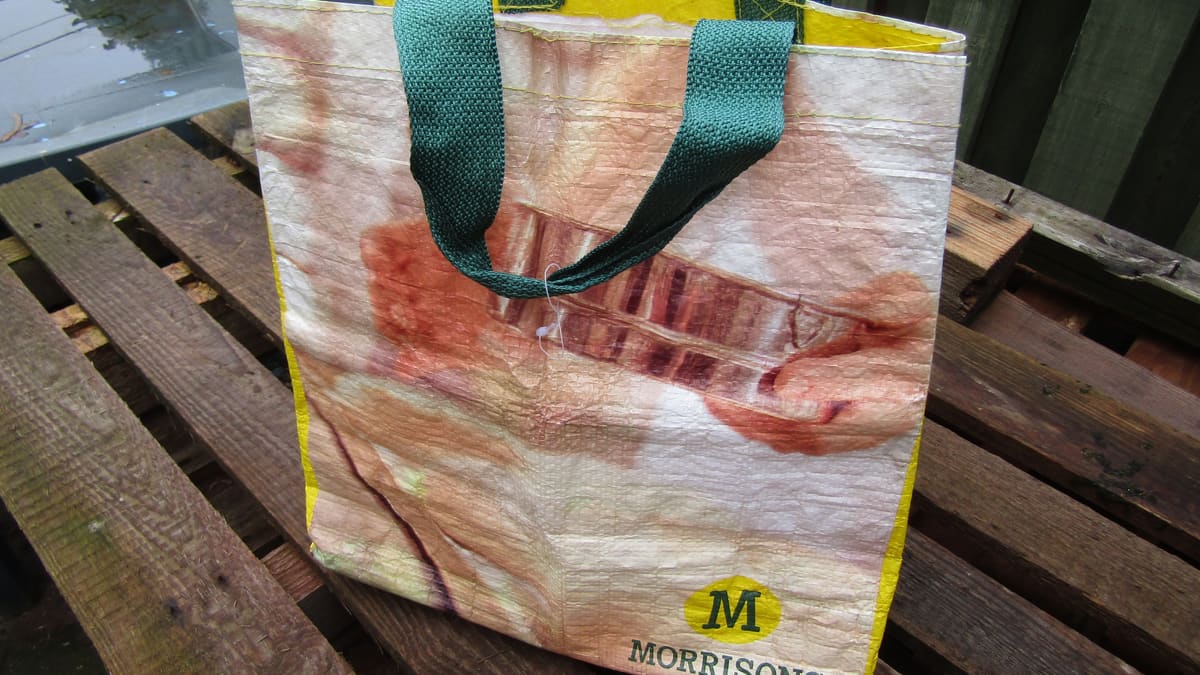

The single-use carrier bag charge is one of the few environmental rules most people in Britain have handled in person. It is also one of the most misquoted. A short note on what the rule really says.
The single-use plastic bag charge is not a UK-wide rule; each nation has run its own. In 2026 the fees and coverage are broadly aligned, but the detail still differs, and the exemptions are easy to miss.
The current fees, nation by nation
| Nation | Charge | First introduced |
|---|---|---|
| England | 10p per single-use carrier bag | 5p in 2015, raised to 10p and extended to all retailers in 2021 |
| Scotland | 10p per single-use carrier bag | 5p in 2014, raised to 10p in 2021 |
| Wales | 5p (further changes under consultation) | 5p in 2011, the first UK nation to charge |
| Northern Ireland | 25p per single-use carrier bag | 5p in 2013, raised to 25p in 2022 |
The figures are the ones published on the four governments' own sites. If a retailer is charging a different amount, they have usually set their own higher minimum, which the rules allow.
Which bags count
The charge applies to new, unused single-use carrier bags with handles, under a set thickness, made in whole or part from plastic. The guidance that most retailers follow for England is on GOV.UK, and the detail matters more than it looks. A bag that is clearly a bin bag, or a paper bag, is outside the scheme. A compostable plastic bag is inside it in England unless specifically certified and the retailer has opted in to an exemption: in practice most UK shops charge for them like any other plastic.
Several categories are exempt because the bag is doing a hygiene job: unwrapped food, raw fish and meat, prescription medicines, uncooked poultry. A bag used solely for those items is free.
Where the money goes
Retailers are not keeping the 10p. They are expected to hand it to good causes, after costs of operating the scheme. In England, retailers with 250 or more staff have to report on the number of bags sold and where the proceeds went; smaller retailers are not obliged to publish. The reported totals are collated by DEFRA and published yearly; the latest figures are on GOV.UK's single-use carrier bags collection.
What the data shows
The published figures tell a clear story. In the year the 5p charge was introduced in England, the big-seven supermarkets handed out over seven billion single-use bags. By the time the charge rose to 10p in 2021, that number had fallen by more than 95 per cent. Since then the sales have continued to drop slowly. The majority of the remaining single-use bags are bought for life rather than for the walk home: loaded up for picnics, used once as a bin liner, and discarded.
The bag for life is now the bigger worry. These are much heavier plastic, often polyester or polypropylene, and are environmentally better only if reused several dozen times. A 2019 Greenpeace report flagged that supermarkets were still shipping hundreds of millions of bags-for-life a year, which the organisations themselves dispute on definitions. The useful number is the one in your own kitchen drawer.
Common misunderstandings
"The 10p goes to the charity on the till"
Only some of it. Retailers can deduct administration and VAT first. What goes to charity is usually the net.
"Thicker bags are exempt"
Not by thickness alone. A bag sold as a "bag for life" is exempt from the charge because it is intended to be reused, and many retailers have voluntary replacement schemes. That is not an environmental free pass, it is a different rule.
"Paper bags cost 10p too"
In England and Scotland, paper bags are outside the scheme, so any charge is the retailer's decision. In Wales the proposal has been to extend the charge to paper as well; check the Welsh Government site for the current position.
Looking ahead
The Extended Producer Responsibility scheme has started shifting the cost of recycling household packaging on to the companies that produce it. If it works, it will matter more than the carrier bag charge did. Your own household signal is still simple: keep two cloth bags at the door, treat every carrier bag in the house as something to reuse, and when the rules change again, you will not need to change what you do.
A harder question is whether low-plastic shopping is actually lower-plastic; see the swaps we have kept using for the rest of the shop.